This is the digital artifact collection for Archaeology 246: Methods and Lab’s excavation of the Women’s League Cabin. It is meant to showcase a selection of the artifacts from our excavation with the goal of extending the reach of both the objects and interpretations through taking advantage of digital methods and the reach of the Internet. These objects showcase the history of the Women’s League Cabin from its daily use by Women’s League, to becoming a party spot, and through its eventual demolition.
The Artifacts
These artifacts were selected as a sort of greatest hits from the excavations. While the objects are generally representative of the whole assemblage we discovered, it would be amiss if we did not acknowledge the bias that these not so random selections introduce.
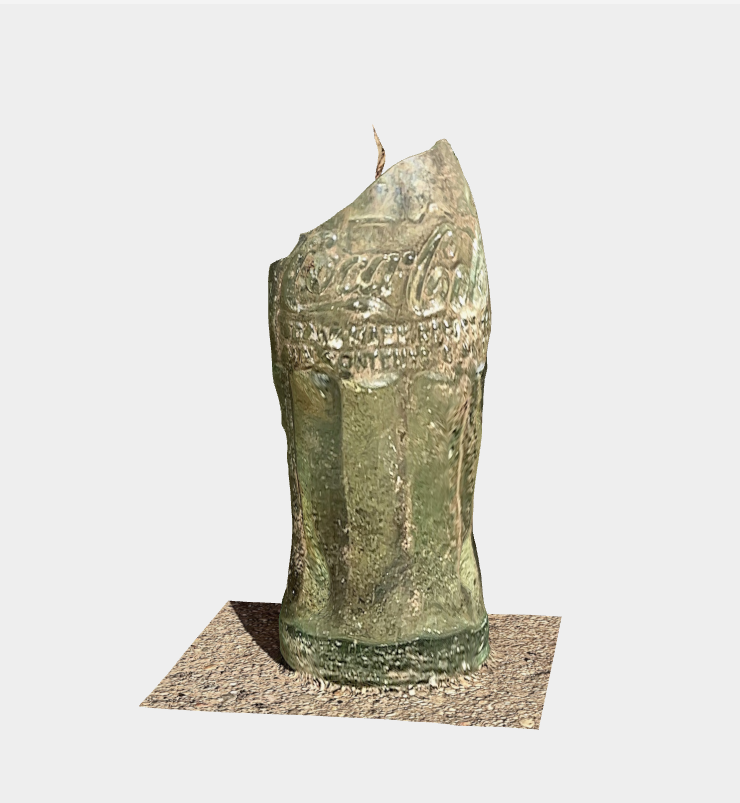
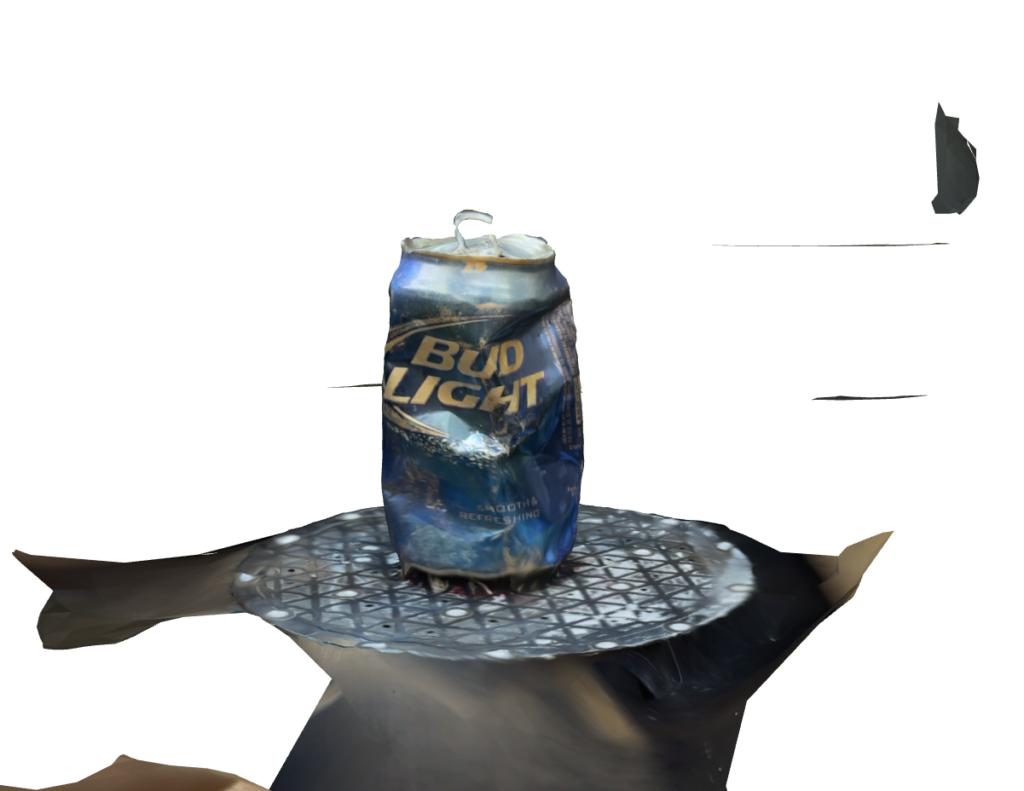
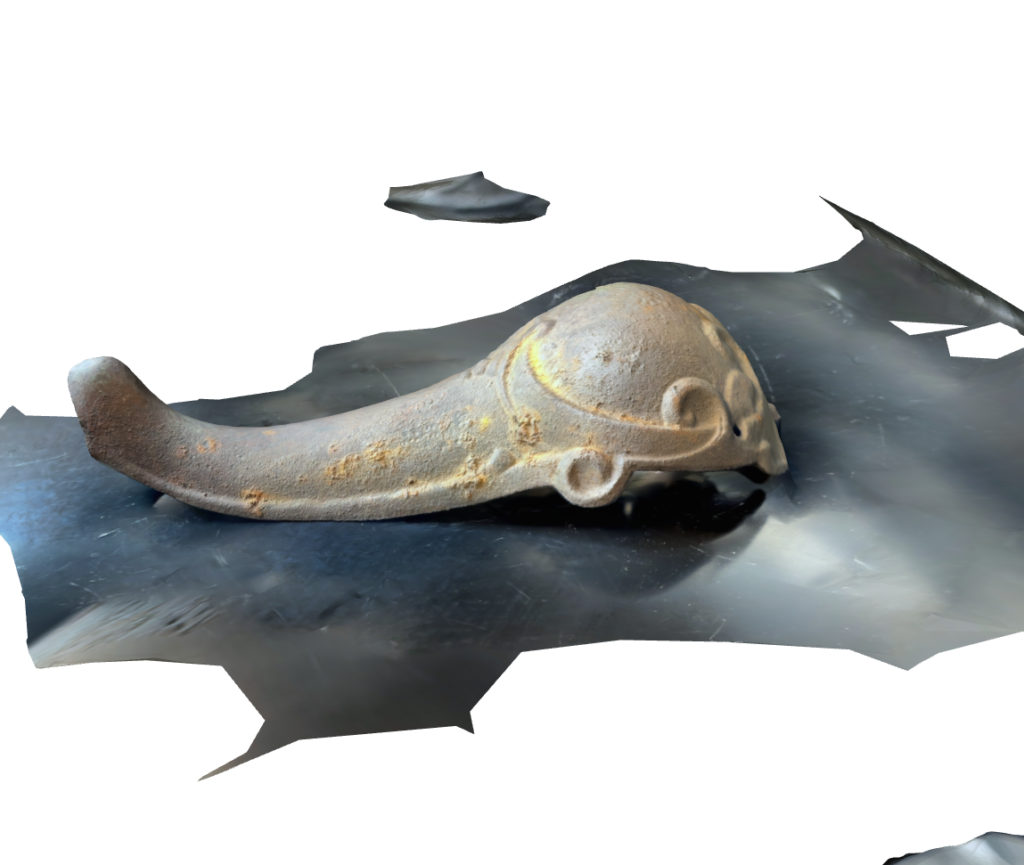
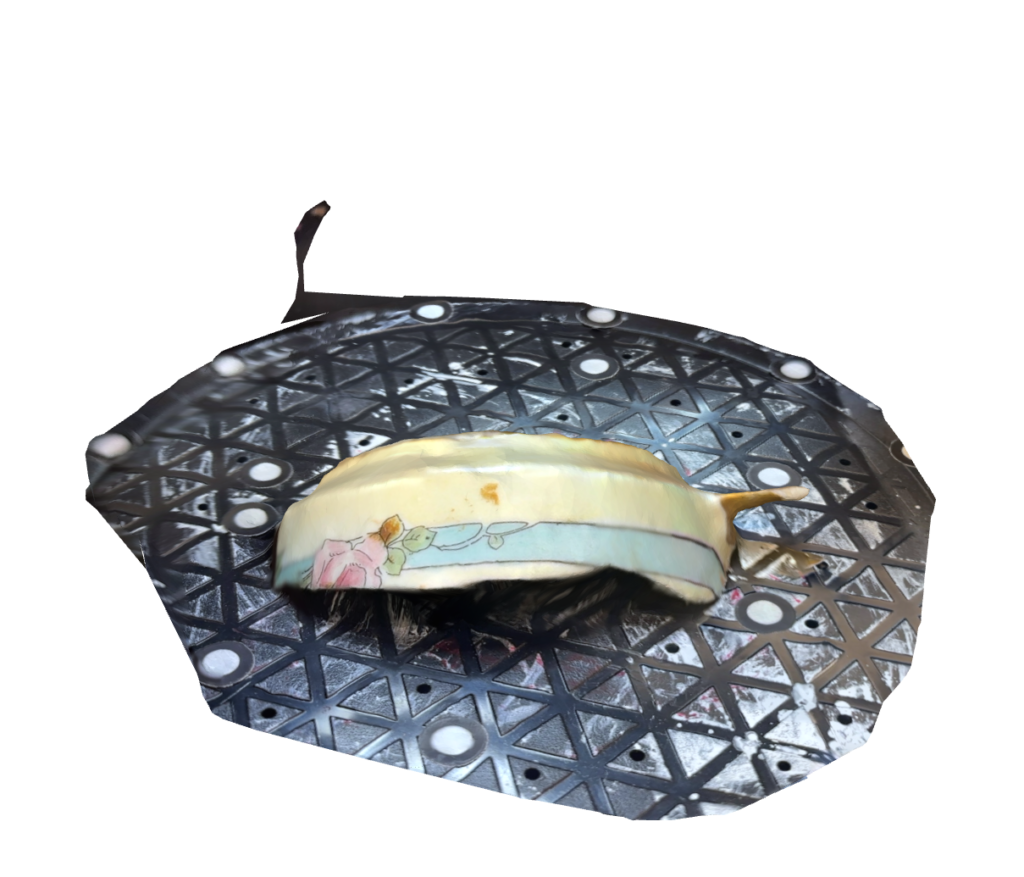
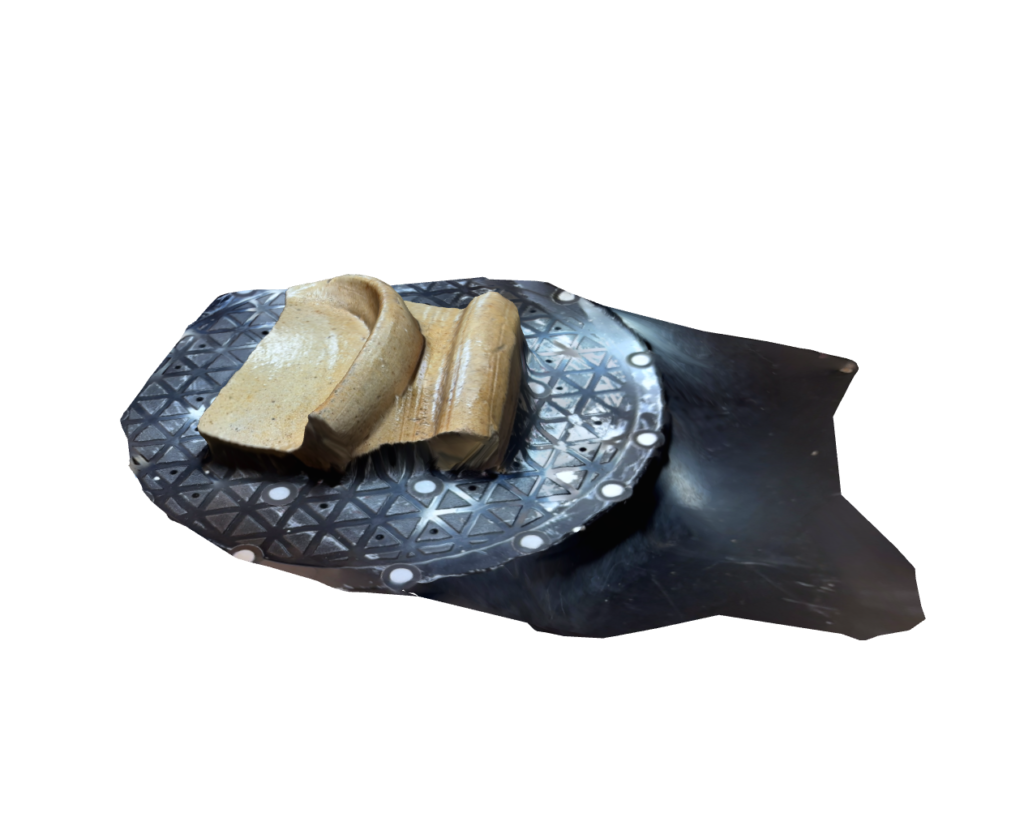
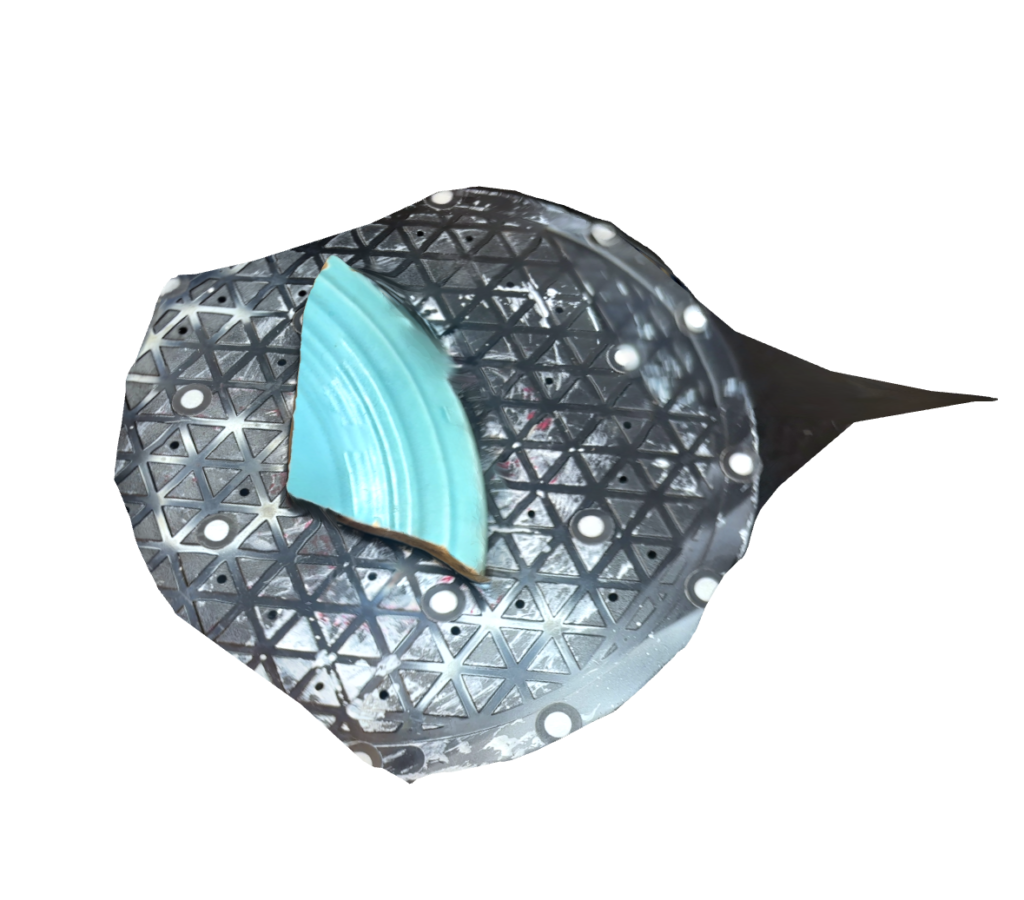
As a whole, the artifacts we chose to highlight show a variety of uses and time periods of occupation of the cabin. A large portion of the artifacts date from the mid-20th century around 1940-1960, when the cabin was in use by the Women’s League. Certain artifacts have yielded concrete dates, like the Coca-Cola bottle produced in 19531, while others provide a larger window of time, such as the metal can with the “Church Key” openings that were generally in use from 1935 through the 1960s.2 However, in interpreting these artifacts, we can look for things beyond just dates. The porcelain bowl sherd was a piece of fine china. After using the pXRF machine to determine the elemental composition of the artifact, we learned that the rim of the vessel was 23 karat gold, while the pattern was hand painted and the glaze contained precious metals for stability.3 This suggests to us that the women using the cabin were wealthy enough to take such fine dishware out into the Arb, either by foot or horseback, where it could get broken or lost more easily than on campus. Their routines in the cabin came to light as well, as we found plenty of food and beverage containers. This period also had the most amount of archival material about the cabin, and so we were able to match certain artifacts to what we saw in the pictures, such as the metal furnace decoration which was originally elusive in nature.
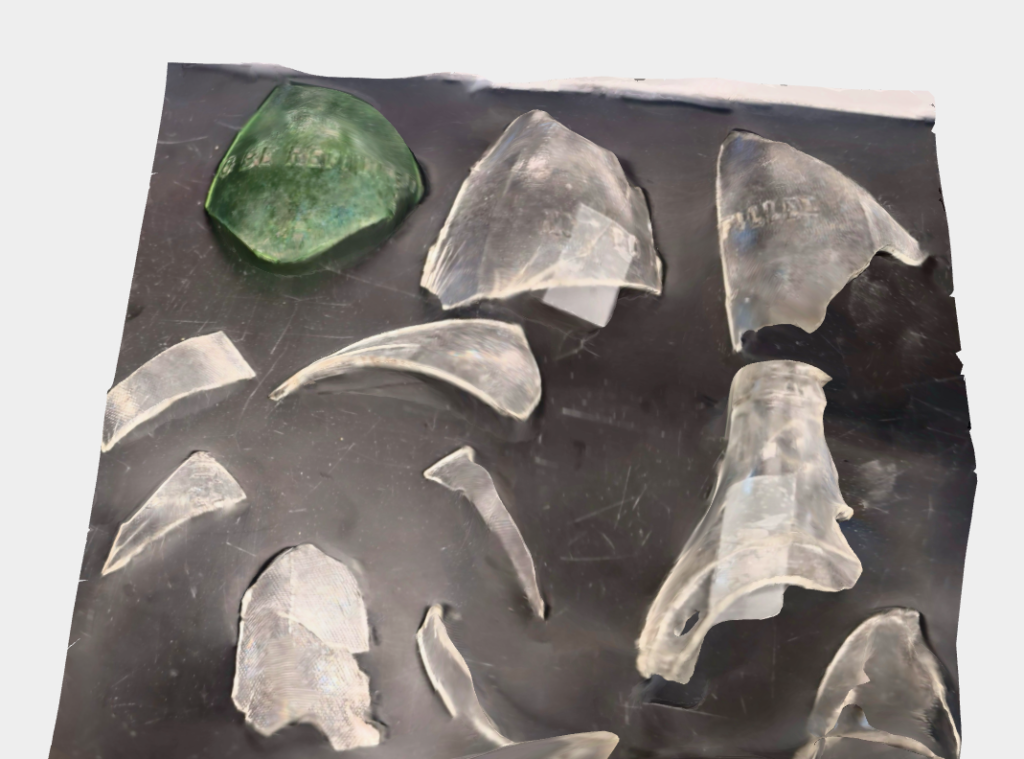
Later on in the history of the cabin, before it was demolished, we see a shift in the artifacts discovered there. While in the years the Women’s League occupied the site the most common artifacts were mostly for daily use, later artifacts seem to revolve around the site as a clandestine party spot. This is partially evidenced by the early 2000s Bud Light from the collection, but there were also more modern remnants of activity, such as relatively recent cigarettes found at the site in 2015. There were multiple broken beer bottles at the site, and a large amount of non-window glass found there as well.
The artifacts found at the Women’s League Cabin paint a picture of its use through time, and when supplemented with the other projects’ archival research, oral histories, and the GIS mapping, we are able to shed light on the use of this site from its inception as the Women’s League Cabin to the present day.
How to use
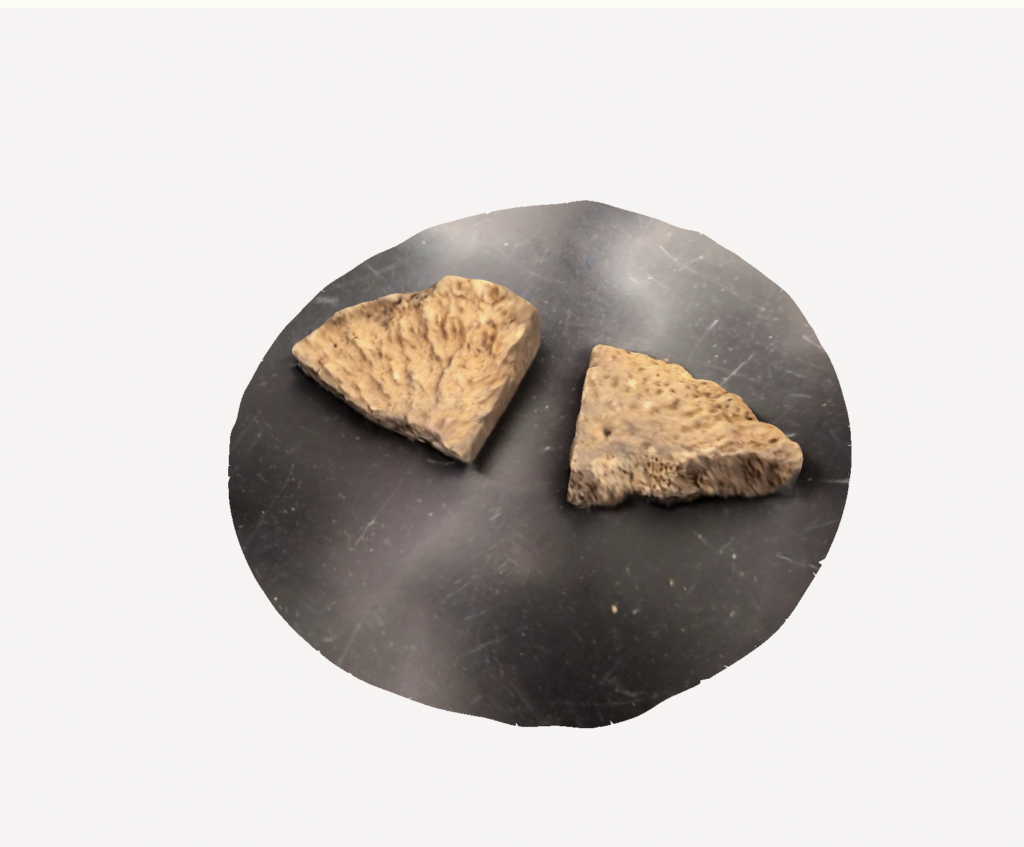
Below is a gallery of the objects we selected for the Digital Artifact Collection. To learn more about each item, click on the icon. You’ll be redirected to the specific page for the artifact of your choosing. The 3D scan of the item may take a moment to load in, so be patient! If you’re on mobile, there are specific instructions underneath the gallery for you to follow.
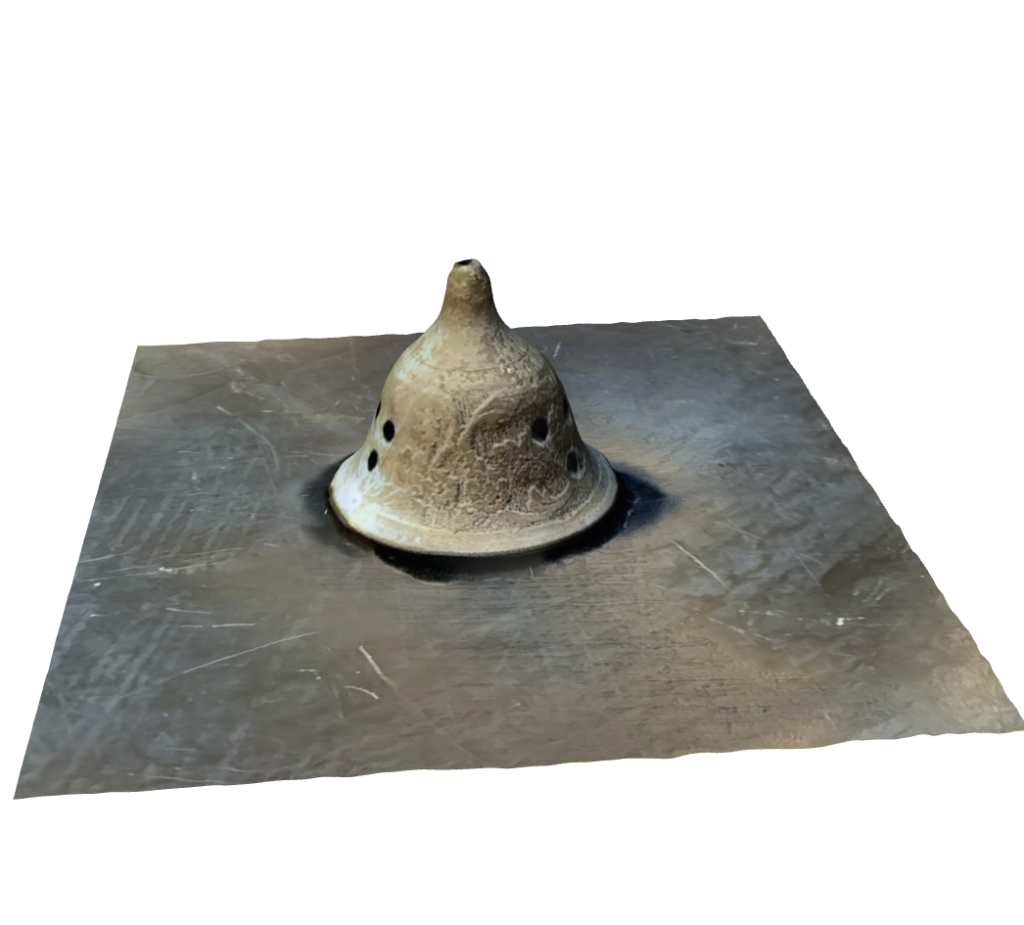
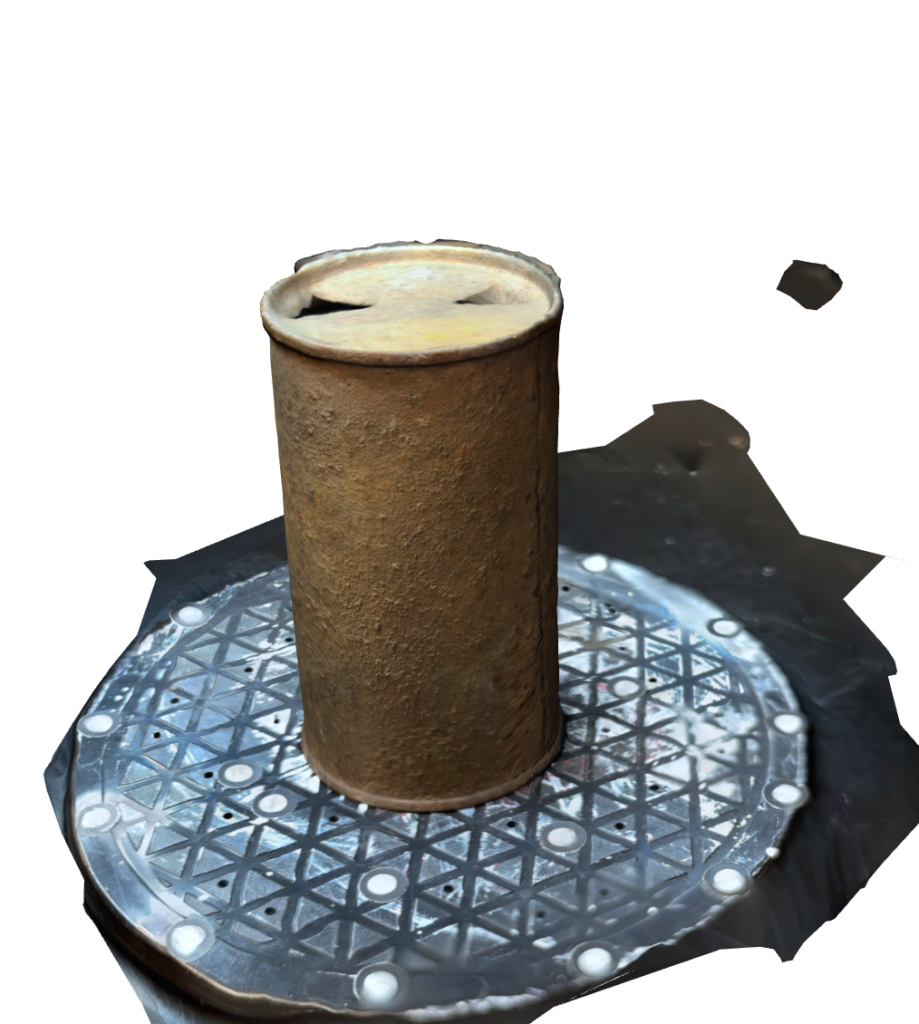
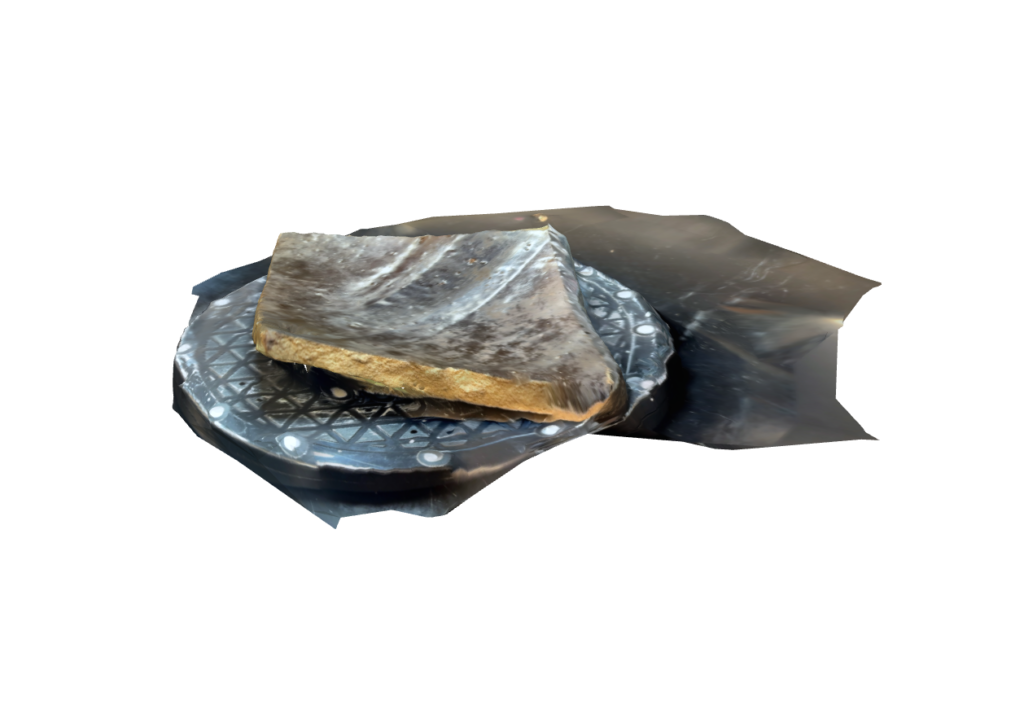
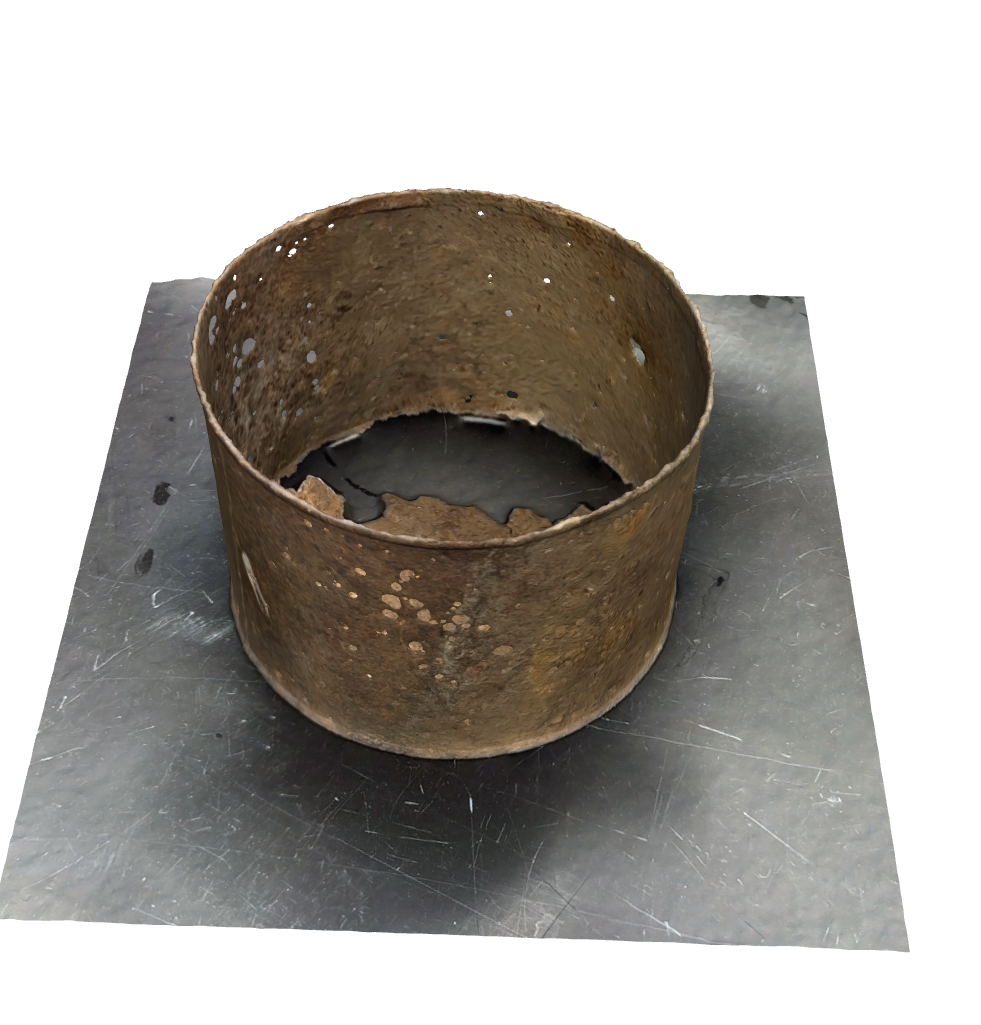
Mobile Instructions
If you are on a mobile device, the 3D scans on each artifact page may not load correctly. For devices running Google Chrome, the current workaround is to view the site in desktop mode. To do this, go to your settings (the three dots in the top right corner) and down in the list is a checkbox that says “desktop site”. Enable it and wait a few seconds, the models take longer to load in on mobile.
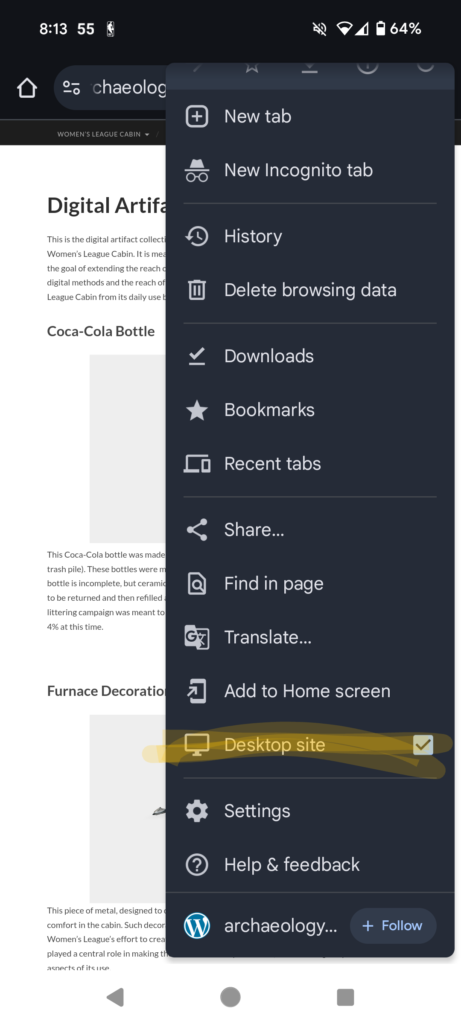
Here’s the setting you need to click!
After this, the 3D model will appear. If the text is too small to read you can zoom in and scroll around the page or put it back into mobile mode to read the text.
Troubleshooting
Run into a problem? Here are some of the issues that may occur:
- Models won’t load
- First, try to wait a few more seconds. 3D models are quite large and it takes the browser a second to retrieve them from our storage space.
- If this still doesn’t work, attempt to reload the page.
- You may be on a mobile device like a cell phone or an iPad.
- Follow mobile instructions above.
Adding to the collection?
Bibliography
Anon 1976. In Code of Federal Regulations: 1949-1984. U.S. General Services Administration, National Archives and Records Service, Office of the Federal Register.
Anon 2024 OUR HISTORY. Keep America Beautiful. https://kab.org/our-history/, accessed November 12, 2024.
Anon. https://animalbiosciences.uoguelph.ca/~swatland/ch2_2.htm, accessed November 22, 2024.
Eve, Stuart 2018 Losing our Senses, an Exploration of 3D Object Scanning. Open Archaeology 4(1):114–122. DOI:10.1515/opar-2018-0007.
Hostettler, Marco, Anja Buhlke, Clara Drummer, Lea Emmenegger, Johannes Reich, and Corinne Stäheli (editors) 2024 The 3 Dimensions of Digitalised Archaeology: State-of-the-Art, Data Management and Current Challenges in Archaeological 3D-Documentation. Springer International Publishing, Cham.
Lockhart, Bill, and Bill Porter 2010 Tracking the Hobble-Skirt Coca-Cola Bottle.
Lyman, R. Lee, and Michael J. O’Brien 2006 Measuring Time with Artifacts: A History of Methods in American Archaeology. University of Nebraska Press, Lincoln.
Merritt, Christopher W. 2014 Historic Artifact Guide.
Moser, Michael, Simon Hye, Gert Goldenberg, Klaus Hanke, and Kristóf Kovács 2010 Digital documentation and visualization of archaeological excavations and finds using 3D scanning technology. Virtual Archaeology Review 1(2):143–147. DOI:10.4995/var.2010.4717.
Naher, S., and A. S. M. A. Haseeb 2008 Production and purification of zircon opacifier from zircon found in the coastal area of Bangladesh. Journal of Materials Processing Technology 205(1):203–206. DOI:10.1016/j.jmatprotec.2007.05.063.
Neamtu, Calin, and Radu Comes 2016 METHODOLOGY TO CREATE DIGITAL AND VIRTUAL 3D ARTEFACTS IN ARCHAEOLOGY. JOURNAL OF ANCIENT HISTORY AND ARCHAEOLOGY 3(4). accessed October 27, 2024.
NSW, Museums & Galleries 2013 Exhibition Labelling – MGNSW. https://mgnsw.org.au/sector/resources/online-resources/exhibition/exhibition-labelling/, https://mgnsw.org.au/sector/resources/online-resources/exhibition/exhibition-labelling/, accessed November 22, 2024.
Schulz, Peter, Bill Lockhart, Carol Serr, Bill Lindsey, and Beau Schriever A History of Non-Returnable Beer Bottles.
Zientek, Michael L., Patricia J. Loferski, Heather L. Parks, Ruth F. Schulte, and Robert R. Seal Ii 2017 Platinum-group elements. Professional Paper. U.S. Geological Survey.