Watch the Documentary
Explore the Storymap
Discover the Artifacts
Below is a collection of artifacts collected at the Olin Farm in 2025. This digital display was also created physically at Community Archaeology Day.
These specific artifacts have been chosen because we believe they tell a varied, winding, and interesting story of the midden and its contents and thus, it reflects the reality of the site. Many artifacts do not have a concrete answer or context, some of them are complete mysteries. We have chosen these because they are of particular note, we wanted assistance from the community identifying them on Community Archaeology Day, or they were unique or special in some way. Although the artifacts are a varied group from what we collected, we would like to mention that they were hand selected to be analyzed for this project because of a number of factors, not least of which is human bias and curiosity. Thousands of artifacts were collected, seven are displayed here.
Artifact 1 – Tea Saucer
Curious about 3D scanning?
You can see artifacts from another archaeological site in the arb HERE.
And you can see how to add and create digital scans for this website HERE.
TEA SAUCER
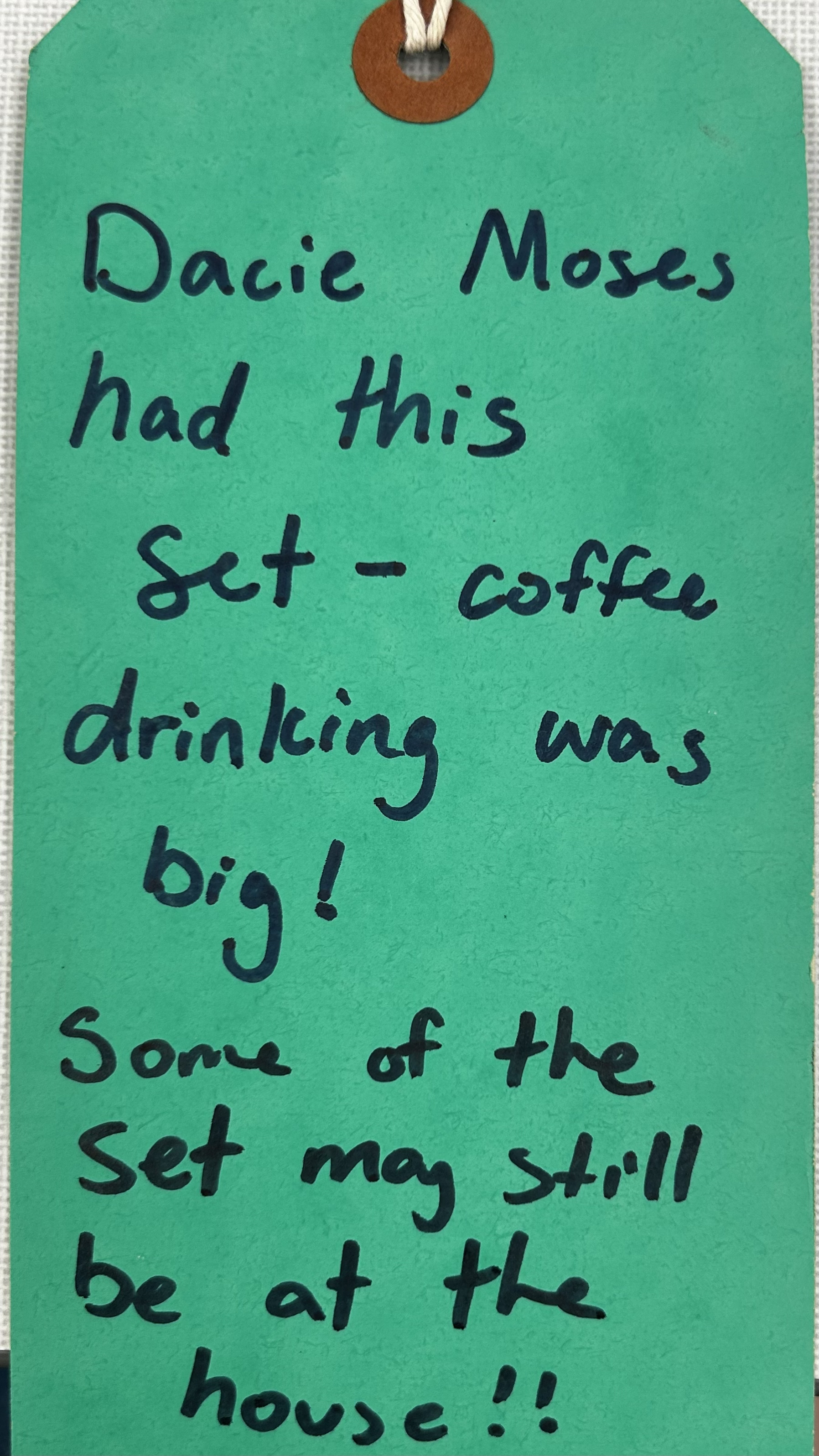
Found inside Excavation Unit 22, this tea saucer is one of three ceramic plates from the Fire King Ovenware line of kitchenware manufactured by Anchor Hocking Glassware in Lancaster, Ohio. This piece does contain traces of gold as we learned through using pXRF technology, and its location under several feet of dirt probably helped to protect the artifact and prevent it from breaking like other ceramic items dispensed in the midden. As we learned from a community member during Community Archaeology Day, this kind of plate was in Dacie Moses house in the 1960’s, and there is potential this kind of plate was also used in Carleton dining halls.
TAGS FROM COMMUNITY ARCHAEOLOGY DAY
These tags contain insights given by community members. Without hosting Community Archaeology Day we would not have gained this significant context and additional artifact information.
In this particular case, the knowledge of an alumni that lived in Dacie Moses house sixty years ago gave us new insights. We still do not have a concrete reason why these plates were in the arb—were they a product of students stealing the plates and abandoning them? Was there a moment in Carleton history they were mass dumped here? It’s unclear, but regardless we have shards of several kinds of plates from this line found in the arb around the same area.