By Linnea Plichta
Introduction
Like any college, Carleton uses rules to keep students safe and keep campus in order. However, Carleton’s rules have a long history of restricting women in their dress, behaviors, and privileges. The Carleton Men’s and Women’s League Handbooks, which were given to new students during orientation week, outline these regulations and demonstrate the disparity between the number of rules for men and women. Although the Women’s League, with representatives elected by the female student body, created these handbooks, the League didn’t have much say their contents. The Dean of Women and the President of the college dictated what was “appropriate” for women at Carleton. In response to changing gender norms, the college added rules to defend traditional gender norms and restrict female students. As early as the 1930s, these efforts were protested and petitioned against by the Women’s League. Eventually, these protests, along with changing society expectations for women, resulted in the end of Carleton’s gender-segregated rules system.
Methodology
To measure the difference in the number of rules for men and women on campus, as well as trends in overall number of rules, I counted the number of rules in the Men’s and Women’s League handbooks from 1913 through 1970. In my rule-counting methodology, I considered a “rule” to be anything listed as “prohibited” or “banned”, as well as any regulation that had a punishment associated with it. I excluded “suggestions” from the college. The college often used this term to loosen regulations toward women, while still suggesting which behaviors are most appropriate for women. I also excluded any rules regarding the Women’s League Cabin, as there was no equivalent for men on campus.
Data
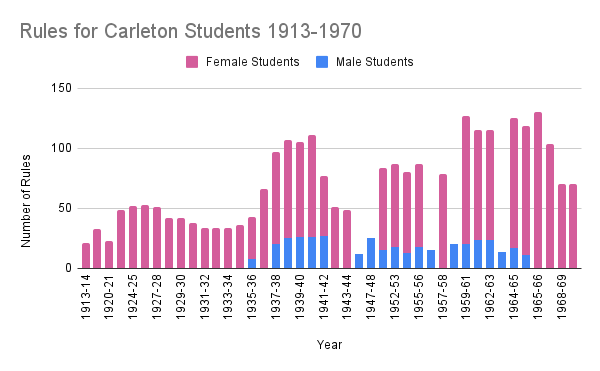
Fig 1: Graph of Rules for Carleton Students by Gender, 1913-1970
This graph displays all Carleton Rules in the respective Men’s and Women’s League handbooks from 1913 to 1970, when the separation of rules by gender largely ended. Unfortunately, the archives were missing several of these handbooks for each gender. Years without handbooks are represented as having no rules; however, this was likely not the case. Although many years of data for men are missing, the major disparity in the number rules for men and women from 1937 to 1965 indicates that the college sought to regulate women’s behavior significantly more than men’s. The upward trend of these rules suggests not only an increasing bureaucracy at Carleton, but pushback against changing gender norms as the college sought to clarify its stance on appropriate behavior for women.
Smoking on Campus
The first instance of Carleton responding to changing social norms was with smoking on campus. In early handbooks, like in 1913, there is no mention of a ban on women smoking on campus. However, this does not mean that this was a permitted or common behavior of women on campus. In the 1920s, it became more acceptable for women to smoke in public in the United States. In 1922, Carleton first implemented a ban on women smoking in most areas of campus. In 1931, Women’s League President Margaret Huddle petitioned the college to change the rule, arguing that the ban was ineffective, bore harsh punishments on women who were caught, and undermined the college’s authority by maintaining such an unpopular rule. Nevertheless, the ban persisted as a “suggestion” until the 60s.
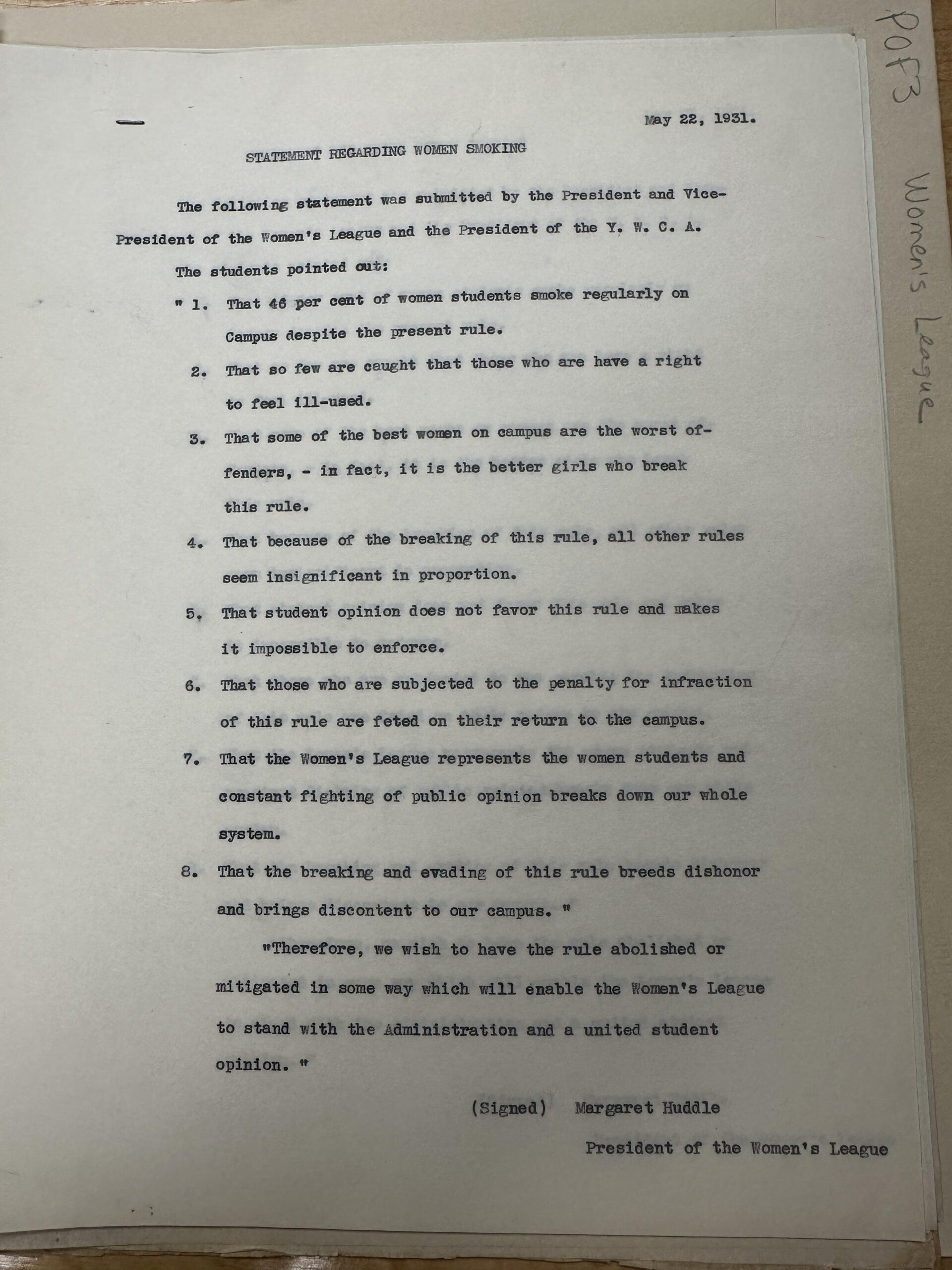
Fig 2: Margaret Huddle, President of the Women’s League, writes a statement against the smoking ban for women in 1931
Dress Code
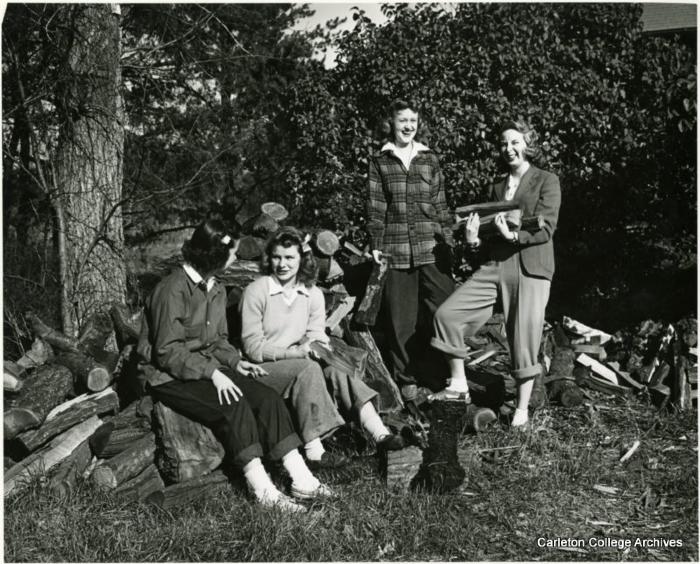
Fig 3: Women wearing pants at the Women’s League Cabin, 1941/1942
Similarly, Carleton instituted a ban on pants following changing gender norms during World War II. In the 1940s, women’s pants were first mass produced as women labored in factories while men fought in the war. This change in norms made pants more culturally acceptable for women. In 1942, Carleton first implemented a formal dress code that regulated when, where, and which types of pants were permitted for women on campus in response to these changes. One notable exception to the pants ban was the Women’s League Cabin.
The “Hours” Policy
As women fought against the hours policy, which regulated women’s movement in and out of dorms, Carleton again pushed back on changing norms. Female students argued in one bulletin that while the college assumes the role en loco parentis, or of a parent at Carleton, the hours policy is inconsistent with the views of most parents. This strategy of appealing to parental authority failed, with the college upholding the policy, but it demonstrates just how controlling the college was over adult women’s lives. Rather than stating their own autonomy to move freely in and out of dorms, female students felt they still needed parent permission to convince the administration.

Fig 4: Statement to female students requesting signed notes by parents in protest of the hours policy
Despite increasing protests, the college continued to uphold the women’s hours policy. Another aspect of the system was restrictions on “open hours”, when women could have guests (including male ones) in their dorms. In 1965, students wrote a report on the hours policy, showing that 79.1% of students thought that open hours were “too few”. The college rejected the report without responding to its contents. In response, students released a statement that they would be protesting, due to the fact that a “…large and diverse part of the student body has been seriously dissatisfied with the administration’s attitude toward student opinion”. While it would take five more years for the policy to officially end, growing student protests demonstrated how women were no longer willing to accept the double standards of the college.
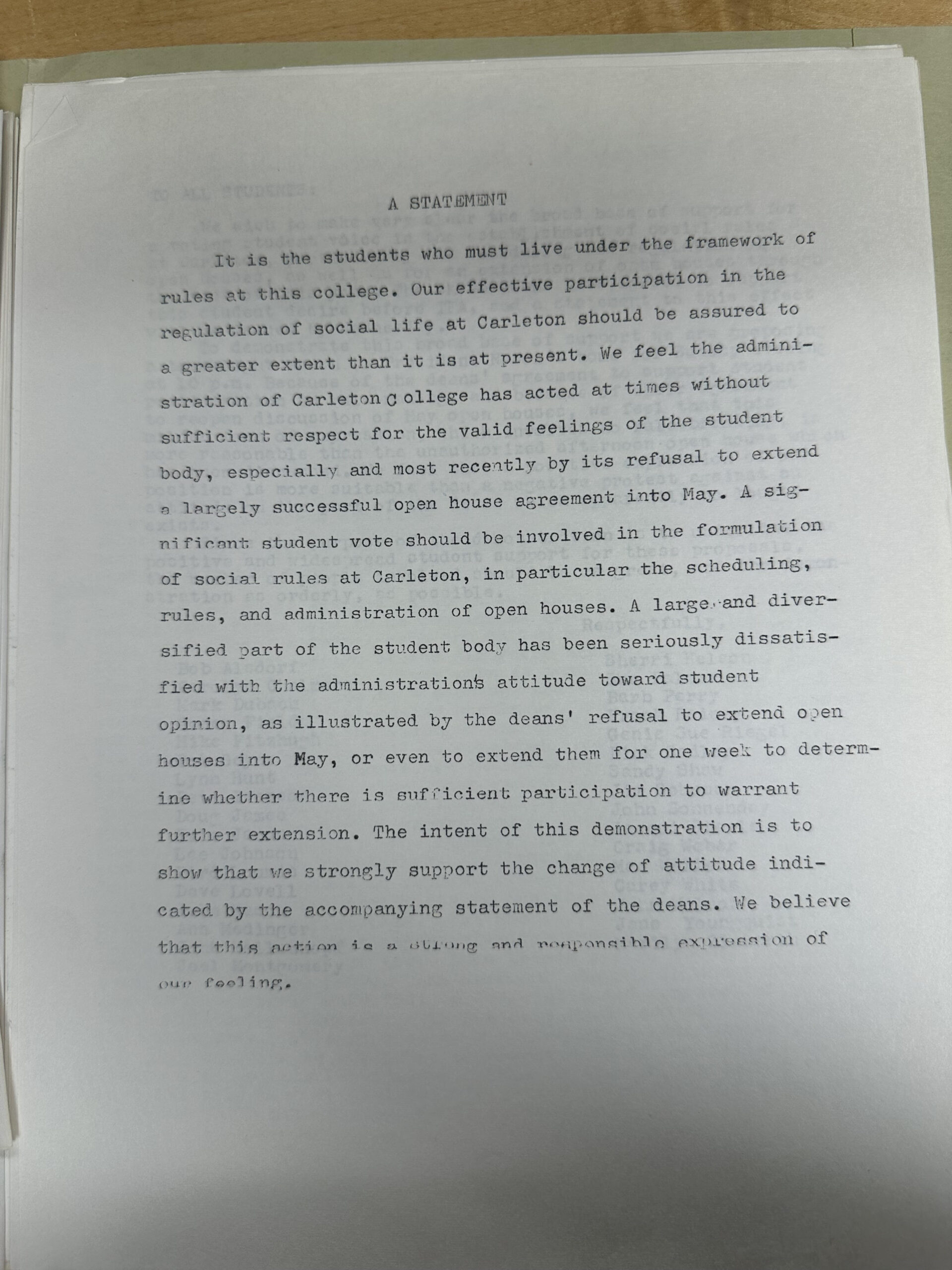
Fig 5: Statement of protest against the open hours policy, 1965
Conclusion
In an era of Carleton marked by restrictive rules towards women, the Women’s League Cabin stands out as a place unbound by these rules. In 1946, the only statement regarding cabin rules in the freshmen was that “the administration of the cabin is in the hands of the Women’s League”, with the college relenting its harsh control over women at the cabin. Women at the cabin defied gender norms by doing traditionally masculine activities, such as chopping firewood. The cabin was a limited exception to the prohibition on pants for women. During WWII, the cabin reached the peak of its popularity, as women sought to flee the oppressive rules of the college. By the 60s, however, the cabin had fallen out of favor, with female students spending their time protesting these restrictions on campus. Rather than escape the rules, they attempted to change them.
In 1970, Jean Phillips ended her tenure as the “Dean of Women” and became the “Dean of Students”. The Women’s League disbanded and merged with the Carleton Student Association, and policies specific to women, including “hours” were obsolete. The cycle of changing gender norms, and Carleton pushing back with more rules, was over. In this process, perhaps the Women’s League Cabin became obsolete as well, as women no longer looked for an escape from campus rules.
Works Cited
Carleton College Archives, “To All Women Students”, Carleton College, n.d
Carleton College Archives, “A Statement”, Carleton College, 1965
Carleton College Dean’s Office, “Statement of the Deans”, Carleton College, 1965.
Carleton College Men’s League, “Open House Report 1”, Carleton College, 1965.
Carleton College Women’s League, “Minutes”, Carleton College, 1970.
Carleton Women’s League, “Women’s League Cabin Rules”, Carleton College, 1945.
Carleton Student Association, Student Handbook, Carleton College, 1967.
Carleton Student Association, The Freshmen Handbook of the Carleton Student Association, Carleton College, 1936.
Handbooks, Carleton College Men’s League, Carleton College, (1935-1966)
Handbooks, Carleton College Women’s League, Carleton College, (1913-1970)
Huddle, Margaret “Statement Regarding Women Smoking”, Carleton College, 1931
“How Tobacco Companies Sold Women a Pack of Lies.” Cancer History Project, 2023. https://cancerhistoryproject.com/article/how-tobacco-companies-sold-women-a-pack-of-lies/.
“When Did Women Start Wearing Pants?” Encyclopædia Britannica. Accessed November 20, 2024. https://www.britannica.com/story/when-did-women-start-wearing-pants.